
By aleeshawear.ae
Disclosure: As an Amazon Associate, we earn from qualifying purchases.
From outside the region, "Gulf fashion" often gets treated as one single look — black abaya, black headscarf, done. The reality is genuinely far more distinct than that. Each Gulf country has developed its own real, identifiable approach to modest dressing, shaped by different histories, climates, and cultural attitudes toward color, embroidery, and how strictly tradition gets followed day to day. This guide breaks down the real, researched differences between Emirati style and the rest of the Gulf — UAE, Saudi Arabia, Qatar, Kuwait, Bahrain, and Oman — country by country.
📌 What Arab Women Wear in Dubai — Beyond the Abaya
The UAE — Emirati Style, Modern Luxury Built on Heritage
Emirati fashion has developed a genuine reputation across the Gulf for blending tradition with real design-forward luxury, rather than treating modest dress as purely functional coverage.
The Abaya as a Fashion Statement, Not Just a Covering
Emirati women have consistently described the abaya as something that evolved alongside fashion trends rather than staying frozen in one design. As one young Emirati professional put it directly in a Gulf News interview, the abaya "represents a beautiful robe that helps us identify with our heritage," while acknowledging openly that "our style is different from Saudi and Qatari women." This is a genuinely important, direct confirmation from within the community itself — Emirati women recognize their own style as distinct, not simply "the Gulf look."
Modern Emirati abayas increasingly feature tailored, structured cuts, subtle color-blocking beyond plain black, and embroidery detail specifically at the sleeves and neckline — a real design evolution rather than a static tradition.
The Emirati Burqa — A Fading but Real Tradition
One genuinely unique detail specific to UAE and Oman: a traditional metallic or cloth-and-wood face covering historically called the "burqa" (distinct from the religious garment of the same name elsewhere), covering the forehead, nose bridge, and upper cheeks while leaving the eyes visible. This piece has largely faded from everyday wear among younger Emirati women, now appearing mostly at weddings and traditional cultural events rather than daily life — a genuine marker of how quickly Gulf fashion traditions can shift within a single generation.
Where to Shop for Emirati-Style Abayas
General everyday Emirati-style abaya shopping searches on Amazon.ae — "structured abaya UAE," "Emirati style open abaya" — consistently surface well-reviewed, genuinely available options across a wide size range.
👉 Shop Emirati-Style Structured Abayas on Amazon.ae
📌 How to Read Size Charts When Shopping for Plus Size Clothes Online in UAE
Saudi Arabia — Elegant Simplicity, Traditionally More Uniform
Saudi women's traditional dress has historically leaned toward a more uniform approach than the UAE — black abayas, black headscarves, and in many cases a niqab or full face veil, worn together as a complete, consistent look. Sources describe this as "elegant simplicity" specifically, in contrast to the more design-varied approach seen elsewhere in the Gulf.
A Genuine Shift Underway
Saudi fashion has genuinely been shifting in recent years, with more color, embroidery, and design variation entering the market than the traditionally uniform black abaya once allowed. That said, the underlying cultural baseline — modest, fully covered, historically monochrome — remains a real, distinct starting point compared to the UAE's more design-forward approach from the outset.
Qatar — Flowy Silhouettes and Doha's Modern-Traditional Blend
Qatari women traditionally wear the abaya paired specifically with a black shayla headscarf, both genuinely tied to concepts of honor, reputation, and status rather than religious requirement alone, according to documented cultural sources. Inside Doha itself, the look blends noticeably with contemporary, cosmopolitan influence — flowing abayas and shawls worn alongside genuinely modern styling choices, reflecting Doha's identity as a global financial and cultural hub built rapidly around a more traditional national core.
The Men's Thobe Detail That Hints at the Whole Culture
Qatari men's traditional thobes are notably made from a distinctively shiny fabric with a stiffly starched collar, nicknamed locally after its cobra-like silhouette — a small but genuine cultural detail that reflects Qatar's broader approach: tradition maintained, but with a polished, formal finish running through even the smallest sartorial choices.
Kuwait — Where Trend Meets Tradition Most Openly
Kuwait has genuinely built a reputation across the Gulf abaya market specifically for blending tradition with contemporary style more openly than some neighbors — a "vibrant demand and diverse supply" market, as one Gulf fashion trade source describes it, where women can find pieces reflecting both cultural values and current trend cycles simultaneously.
Kuwaiti Jalabiya Style, Specifically
The Kuwaiti jalabiya style carries its own recognizable details — a fitted silhouette often finished with a tie-up belt, contrast prints, and an inner slip layer built into the design itself, distinct from a purely plain Gulf abaya silhouette.
A Genuinely Confirmed Kuwaiti-Style Brand on Amazon.ae
The Kashmir Emporium — Reliable Kuwaiti-Style Jalabiya Dresses
The Kashmir Emporium offers a genuine, confirmed Kuwaiti-style embroidered jalabiya on Amazon.ae — cotton embroidery with beaded detail, a tie-up belt, and a high neck with long sleeves, matching the documented Kuwaiti silhouette closely rather than a generic imitation.
👉 Shop The Kashmir Emporium Kuwaiti-Style Jalabiya on Amazon.ae
📌 Traditional Gulf Style Dresses on Amazon.ae UAE
Bahrain — The Most Relaxed Gulf Approach
Bahrain is genuinely documented as the least strict of the Gulf states when it comes to dress code — travel and cultural sources specifically note that locals often wear Western-styled clothing rather than exclusively traditional Gulf dress, and traditional Bedouin clothing is rarely seen in cities at all, unlike some neighboring countries. Bahraini traditional wear, when it does appear, leans toward "distinctive charm" reflecting the country's blended cultural influences as a small, historically trade-connected island nation.
A Genuine Caveat Worth Knowing
Despite this relaxed approach, sources are specific that "too short, too sheer, or too cropped" clothing still isn't appropriate even in Bahrain's more Western-leaning cities — the relaxed dress code applies to style choice, not to modesty expectations disappearing entirely.
Oman — Color and Embroidery Set It Genuinely Apart
Oman stands out most distinctly among all six Gulf countries specifically for embracing color and embroidery far more openly than its neighbors. Where Saudi and Qatari traditional dress lean heavily toward black, Omani sources describe women wearing "vivid textiles" in a genuine combination of garments, with regional style variation across different parts of the Sultanate itself. Omani men's traditional dishdasha is similarly documented as colorful — black, green, and brown variants exist alongside white, a genuine departure from the uniformly white thobe worn elsewhere in the Gulf.
An Honest Note on Availability
We could not confirm a dedicated, verified Omani-style embroidered abaya brand specifically available on Amazon.ae at the time of this research — this specific regional style appears to remain more of a specialty or boutique category rather than something with confirmed marketplace availability. If this changes, we'll update this section directly rather than leave an unconfirmed brand listed.
What This Actually Means When Shopping in the UAE
Living in the UAE means genuine daily exposure to all six of these distinct approaches at once — Emirati, Saudi, Qatari, Kuwaiti, Bahraini, and Omani women all live, work, and shop across Dubai and Abu Dhabi together, each bringing their own country's real fashion identity rather than one unified "Gulf style." Recognizing these differences — the UAE's design-forward luxury approach, Saudi Arabia's traditionally uniform simplicity now shifting, Qatar's polished blend of tradition and Doha's cosmopolitan edge, Kuwait's openly trend-forward market, Bahrain's genuinely more relaxed dress code, and Oman's distinctive embrace of color and embroidery — offers real, useful context for understanding modest fashion here as a genuinely diverse landscape, not a single monolithic style.
The Real Rule
Gulf fashion was never one single look, however it's often represented from outside the region. Six countries, six real histories, six genuinely distinct relationships with color, embroidery, and how tightly tradition gets held onto — understanding these differences means understanding the Gulf's fashion landscape accurately, rather than flattening it into a single stereotype. 💕
-
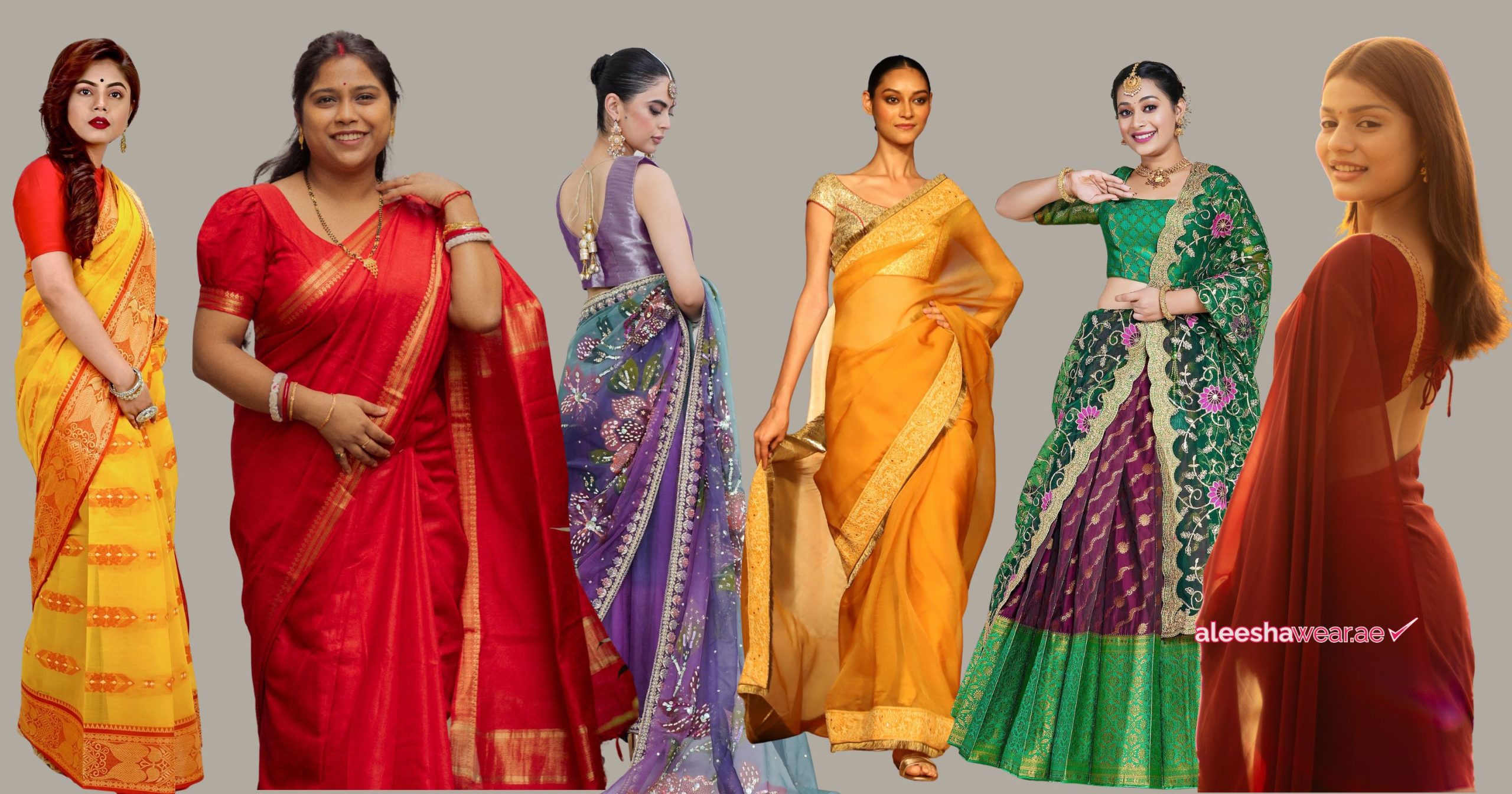
11 Affordable Indian Saree Brands on Amazon.ae: Reliable Picks for Every Woman in the UAE
11 affordable, reliable Indian saree brands on Amazon.ae, from budget daily wear to festive Banarasi…

-
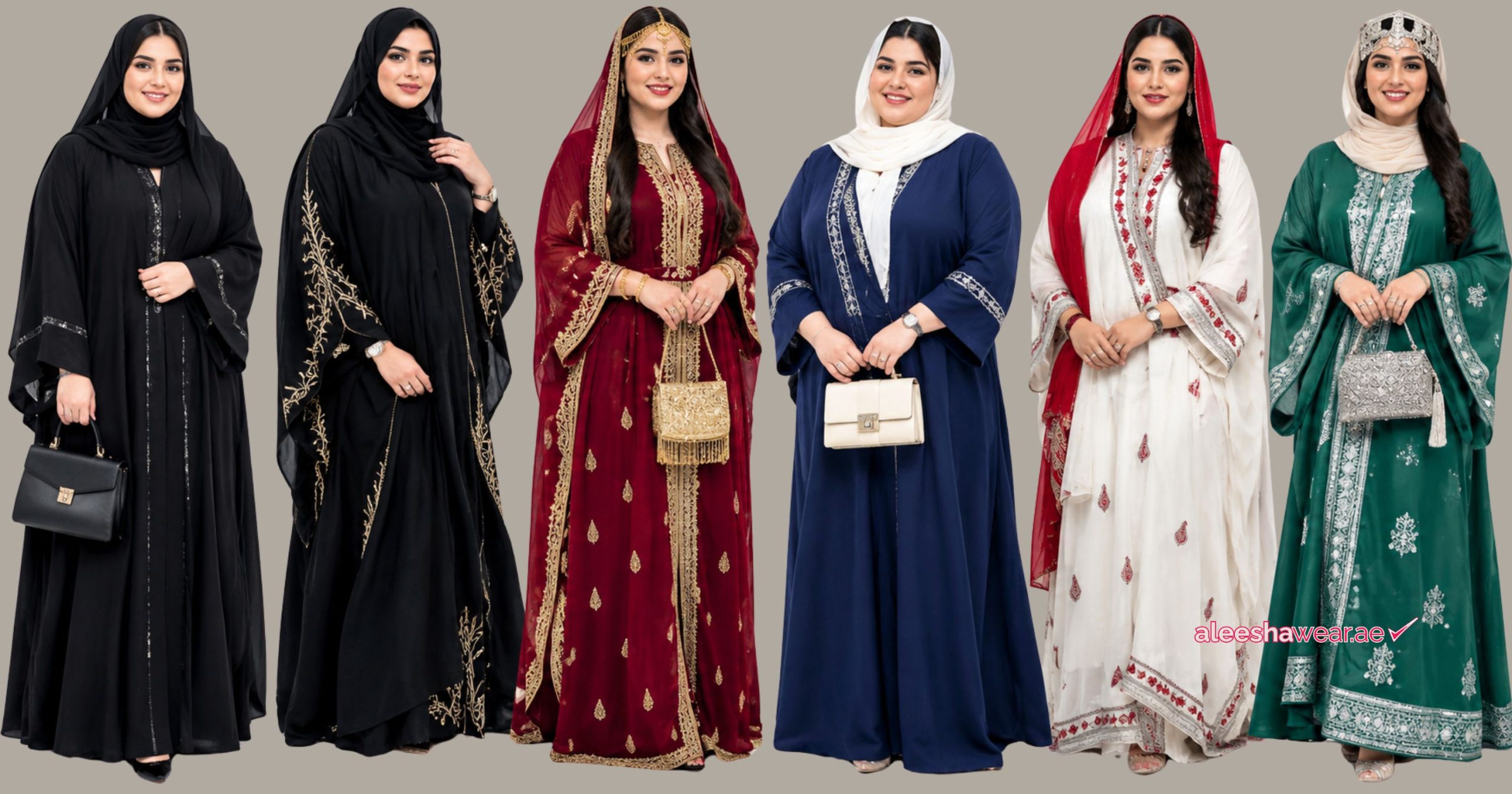
How Emirati Style Differs From Saudi, Qatari, Kuwaiti & Other Gulf Fashion
How Emirati style genuinely differs from Saudi, Qatari, Kuwaiti, Bahraini, and Omani fashion — real…
-
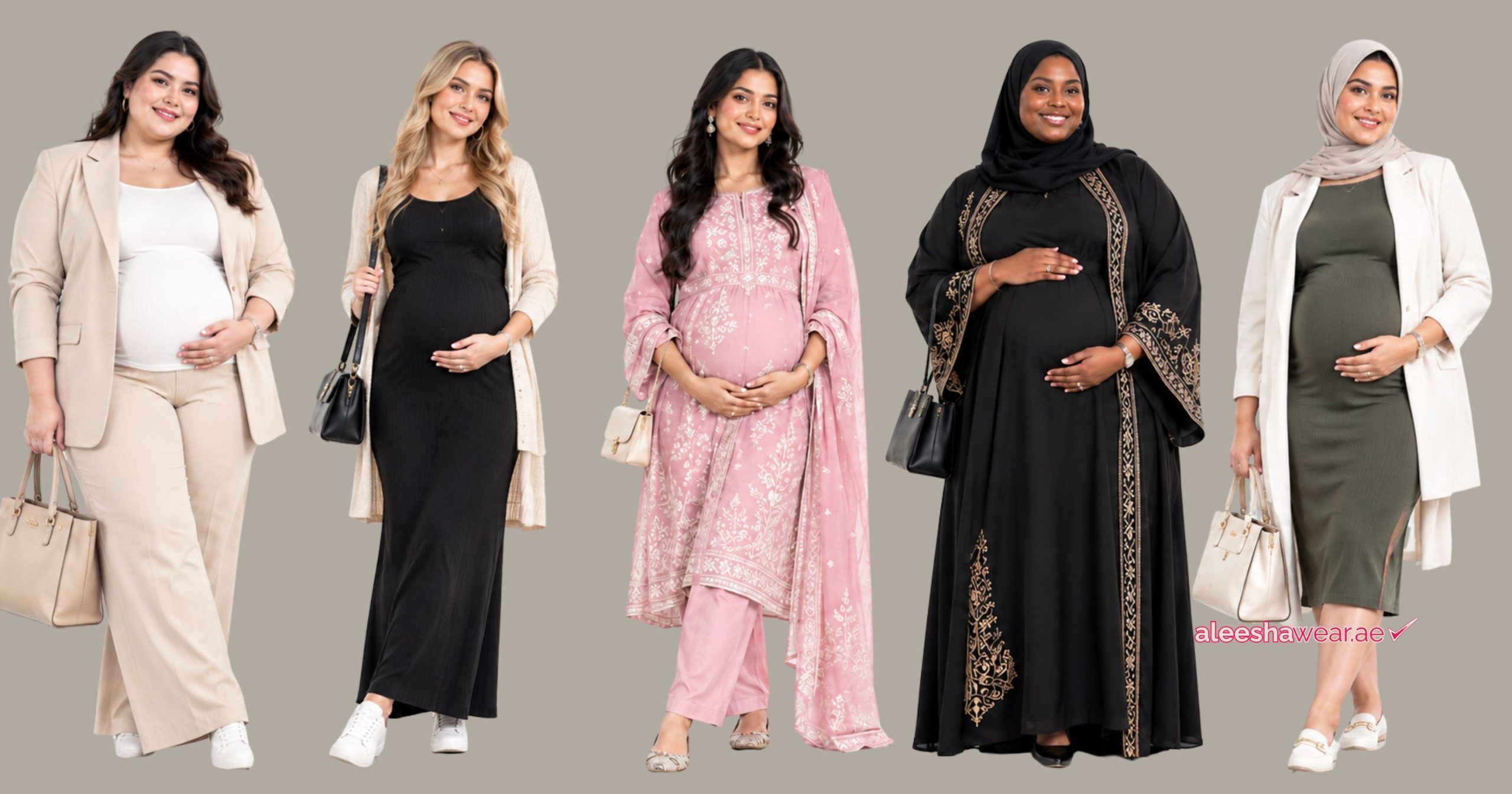
How to Manage Business and Work Dressing While Pregnant in the UAE
How to manage business and work dressing while pregnant in the UAE — real fabric…